
Aesthetic - Decorate & Design
Fliq LabCasual
4.7163.00 Reviews
- Version
- 6.4.0
- Installs
- 10.00K
- Age Rating
- Everyone
Screenshots
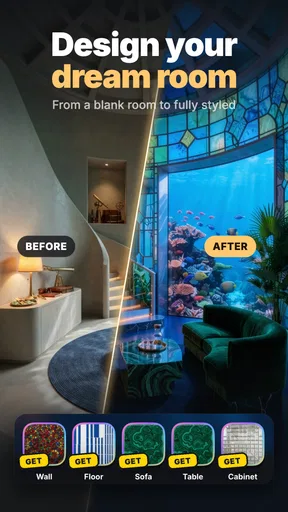
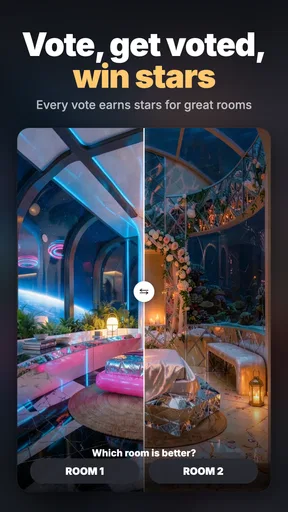


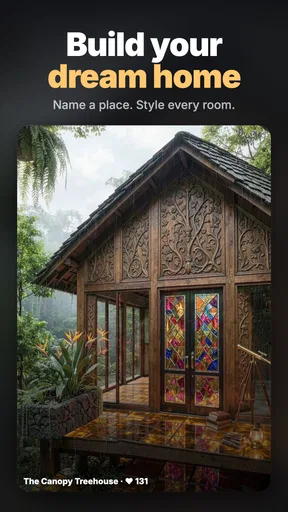

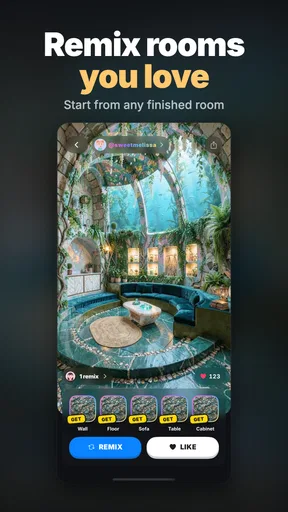
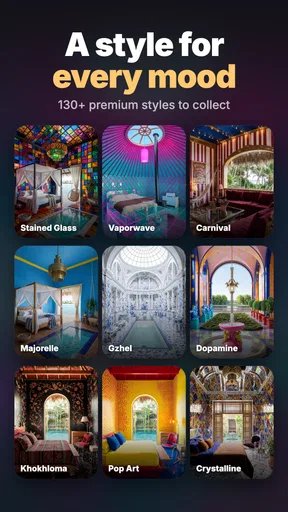
Our Review of Aesthetic - Decorate & Design
 Analysis by Appyee
I spent time with Aesthetic - Decorate & Design because its central idea is easy to understand: you create attractive rooms, make design choices, and see how your taste performs against other players. That sounds simple, but the appeal is more specific than a standard decorating game. The pleasure comes from turning a mostly empty space into something that feels intentional, then deciding whether to follow your own style or make choices that are more likely to impress a wider audience.
It is a free casual game from Fliq Lab, aimed at Everyone, and it feels best suited to short creative sessions rather than long, demanding play. The current version is 6.4.0, and the game runs on Android 7.0 or later. Its 4.7 average from around 1.7 thousand ratings suggests that the basic decorating loop connects well with its audience, while more than 10 thousand installs show that it has found a modest but interested player base.
Why the room-design challenge is the real attraction
The most important capability here is not simply placing attractive objects. It is the ability to make a room read as a complete visual idea. That difference matters. A collection of expensive-looking or colorful items can still feel messy if the pieces do not share a mood, while a restrained design can look much more convincing when the colors, shapes, and empty space work together.
I like that this gives the game a small creative problem to solve. You are not only asking, “Which item do I like?” You are also asking, “What should this room say at a glance?” A soft bedroom, a bright social space, and a calm minimalist interior need different decisions. Even without turning the experience into a professional design tool, the game encourages you to think in terms of balance, contrast, and consistency.
That is where the worldwide competition adds pressure. A room can be personally satisfying and still not appeal to the largest number of players. Conversely, a safer design may perform well even if it is not the one I would choose for my own home. This creates a useful tension between personal expression and broad visual appeal, and it is the part of the game I found most interesting after the initial novelty wore off.
The strongest reason to play is the quick design decision, not the promise of endless decoration. I can open the game with a rough idea, test a visual direction, and finish with a room that feels noticeably different. That makes it a good fit for a spare moment, especially when I want something creative without learning complicated rules.
How the design loop feels in practice
The basic process is approachable. I enter a decorating challenge, consider the room and its visual needs, choose pieces that support a direction, and then see how the result compares in the competitive environment. The simplicity is helpful because there is little barrier between having an idea and trying it. I do not need a tutorial-heavy strategy game mindset before I can make a first room.
What takes more thought is editing myself. My first instinct is often to add another attractive object, another accent color, or another decorative detail. That usually makes a design less clear. A practical habit is to decide on the room’s main mood before choosing individual pieces. Once that decision is made, I can reject items that are appealing on their own but distract from the overall composition.
I also found it useful to judge the room from a distance rather than focusing on one corner. A design may contain several good details but fail as a whole if the eye has nowhere to settle. Looking at the complete scene helps reveal whether the dominant color is too strong, whether the furniture feels crowded, or whether the room needs one contrasting element instead of several competing ones.
Another effective approach is to build around one anchor item. That might be the most noticeable furnishing, a strong color, or a particular style. I then treat the remaining choices as support rather than independent attractions. This is a small but meaningful improvement over tapping whatever looks appealing next, and it makes the competitive side feel less random.
The game’s casual format means I can experiment without treating every attempt as a serious commitment. That is important for creative play. A room that does not work is still useful because it shows me which combinations feel too busy or too flat. I would not approach it as a precise simulation of interior design, but it does reward visual judgment in a compact way.
A realistic everyday session
Imagine having ten minutes during a commute or while waiting for an appointment. A traditional design application might feel too open-ended: there are too many tools, too many decisions, and no clear stopping point. Here, the challenge gives the session a natural shape. I can choose a direction, arrange the room, make a few corrections, and leave with a finished result rather than an unfinished project.
That same structure works after a busy day when I want a low-pressure distraction. I can focus on color and placement instead of reflexes, complicated objectives, or a long story. The competitive result gives the session a little purpose, but the main activity remains visual and relaxed. For me, this is more satisfying than scrolling through a collection of disconnected mini-games because each round produces something I have shaped.
There is also a useful social angle in the ranking element. Seeing that other players favor a different balance can make me reconsider my own choices. I do not have to copy the most popular look, but the response helps me understand how a room communicates to people who did not see the reasoning behind it. That makes the game feel closer to a small design exercise than a simple decoration sandbox.
How to improve results without losing your own style
If your goal is to climb the ranks, I would avoid changing everything after one disappointing result. Instead, identify the most obvious weakness. Was the room too crowded? Did the colors compete? Did the main object disappear among smaller details? Making one deliberate adjustment teaches more than replacing every item at once.
I also recommend deciding whether you are playing for expression or performance before starting a challenge. Those goals overlap, but they are not identical. A highly personal room may be the most rewarding to make, while a more familiar and widely appealing arrangement may have a better chance in a ranking environment. Knowing which goal matters in that session prevents frustration.
One non-obvious benefit of this approach is that it makes the game easier to enjoy over time. If every result becomes a judgment of your taste, competition can become tiring. If you treat each room as a test of one idea, even a weak placement gives you information. That mindset turns ranking from a final verdict into feedback for the next design.
The tradeoff between creativity and competition
The competitive structure is both the game’s hook and its main limitation. It gives decorating a reason to continue, but it can also encourage predictable choices. When success depends on what many players find attractive, unusual designs may feel risky. Someone who wants complete freedom may prefer a pure decorating sandbox where there is no pressure to appeal to anyone else.
There is a similar tradeoff between accessibility and depth. The casual format is welcoming, but players looking for detailed architectural planning, extensive customization, or a complex economy may find the experience lighter than expected. This is not a flaw for its intended audience; it simply means the game works better as a focused visual pastime than as a full interior-design simulator.
The free entry point is convenient, although in-app purchases range from $1.99 to $99.99 per item. That spread is worth keeping in mind before becoming deeply invested in collecting or progressing through paid options. I would start with the free experience and decide later whether additional spending genuinely improves my enjoyment. The game is easiest to recommend when the player is comfortable treating purchases as optional rather than necessary.
Another limitation is that the appeal depends heavily on whether you enjoy making visual decisions. If you want action, narrative progression, puzzles with clear right answers, or a competitive game based on skillful timing, this will probably feel too gentle. It also may not satisfy someone who wants to spend hours perfecting one room with highly technical control. Its strength is the quick, readable design challenge, and that focus naturally leaves other kinds of depth aside.
Who will get the most from it
I think the best audience is anyone who enjoys aesthetic choices but does not want the workload of a professional creative tool. It is particularly suitable for players who like casual games with a visible result, people who enjoy comparing styles, and anyone who wants a relaxing activity that still involves judgment. The Everyone rating also makes it an approachable choice for a broad audience.
It is a good alternative to passive inspiration browsing because it asks me to act on an idea. It is also more immediately structured than an open-ended decorating application. On the other hand, a dedicated design app is the better option if the goal is planning a real room, measuring spaces, or working with practical furniture layouts. A building game is likely a better match for someone who wants construction, exploration, or a larger world around the decorating.
Players who dislike rankings should not assume that the creative part will automatically compensate for the competitive pressure. The rooms are enjoyable to make, but comparison is part of the identity of the game. I would also skip it if spending limits are a major concern and the presence of a broad in-app purchase range is likely to create temptation. A free game can still require personal discipline around optional purchases.
For new players, my advice is to begin with a simple visual rule: choose one dominant mood, one supporting color family, and one focal point. Do not fill every visible space immediately. Complete the room, step back, and remove the item that contributes the least. This workflow is more reliable than trying to make every object stand out, and it helps reveal why some designs feel polished with relatively few elements.
My final view after using the decorating loop
Aesthetic - Decorate & Design succeeds because it turns a familiar decorating idea into a compact test of visual communication. I enjoy the moment when a room stops looking like a collection of choices and starts feeling like one coherent place. The global competition gives that moment extra meaning, even if it sometimes nudges players toward safer designs.
Fliq Lab has kept the concept accessible enough for casual play, and the free price makes it easy to try before deciding whether the competitive loop suits you. The 4.7 average is understandable: the central activity is clear, relaxing, and easy to revisit. Still, I would not describe it as a universal recommendation. Its lighter depth, ranking pressure, and optional purchase range matter for anyone expecting a full design simulator or a completely uncompetitive creative space.
My recommendation is straightforward. Try it if you like room makeovers, color matching, and short challenges where your choices create the content. Use a clear design plan, leave some breathing room, and treat rankings as feedback rather than proof that one style is correct. If that sounds enjoyable, this casual game can provide a surprisingly thoughtful break. If you need story, action, construction depth, or technical planning, another category will serve you better.
Verdict
Strengths of Aesthetic - Decorate & Design
- Easy-to-use tools make decorating rooms quick and enjoyable.
- Offers creative freedom for experimenting with colors, furniture, and layouts.
- Relaxing gameplay is suitable for short, casual sessions.
- Progression unlocks new decor items and design possibilities.
- Appealing visuals give rooms a polished and satisfying appearance.
Limitations of Aesthetic - Decorate & Design
- Some furniture and design options may require in-app purchases.
- Limited room space can restrict more ambitious decorating ideas.
- Repeated design tasks may feel similar after extended play.
- Advanced customization features are not always immediately available.
- Performance may vary on older devices with limited storage or memory.
Similar Picks in This Category
View All
My Talking Angela
Outfit7 Limited4.2

My Talking Tom
Outfit7 Limited4.3

Pou
Zakeh4.2

My Talking Tom 2: Pet Game
Outfit7 Limited4.3

Candy Crush Saga
King4.6

Bridge Race
Supersonic Studios LTD4.1
Frequently Asked Questions
What is Aesthetic - Decorate & Design?
Aesthetic - Decorate & Design is a creative decorating game focused on arranging and styling rooms, spaces, and decorative scenes. It allows you to experiment with furniture, colors, textures, accessories, and different visual themes. The app is aimed at users who enjoy interior design, organization, and relaxing creative gameplay without needing professional design experience.
How does the decorating gameplay work?
The gameplay generally involves selecting a space, choosing suitable furniture and decorative objects, and placing them to create a visually appealing design. You can combine items according to your preferred style, adjust the overall arrangement, and complete design challenges or themed projects. Its simple controls make it accessible, although some customization options may become available gradually.
Is Aesthetic - Decorate & Design free to download and play?
The application can typically be downloaded for free, but users should check the store listing for the current pricing and monetization details. Like many design games, it may include optional in-app purchases, advertisements, or premium items that unlock additional furniture, decorations, themes, or faster progress. You can usually begin playing without paying, but some content may be limited.
Does the app require an internet connection?
An internet connection may be needed for downloading the application, receiving updates, synchronizing progress, displaying advertisements, or accessing certain events and content. Some basic decorating activities may work offline, but this can vary depending on the device version and how the game is configured. For the most reliable experience, use a stable Wi-Fi or mobile data connection.
Is Aesthetic - Decorate & Design suitable for children?
The game is generally suitable for people who enjoy calm, visually focused decorating experiences, including older children and teenagers. However, parents should review the official age rating, advertising settings, chat or social features, and in-app purchase options before allowing younger users to play. Activating parental controls and disabling unauthorized purchases is recommended if children use the device.
Play our best games!


